
Pharr City Directory Collections
No official source located a publisher, a year run, a page image, or a sample entry for a Pharr city directory. That limitation matters. It would be wrong to label an unverified book as a Pharr directory or to assign it a span of years. The documented collection route is broader: ask Pharr Memorial Library about local holdings, search the Texas State Library and Archives Commission by Pharr and Hidalgo County, and use verified newspaper, yearbook, cemetery, deed, and tax material to test a dated address. The table distinguishes confirmed collections from the city-directory run that has not yet been identified.
| Collection | Years | Where Held | Access |
|---|---|---|---|
| Verified Pharr city-directory run | Not located in official research | Not established | Search TSLAC, UNT, and Briscoe by Pharr and Hidalgo County |
| Pharr Press partner collection | 1950s through 1980s | Portal to Texas History | Guided, Advanced, and Proximity Search online |
| Hidalgo County deed indexes and volumes | 1852 forward, with dates varying by volume | TSLAC inventory and UTRGV Edinburg depository | Microfilm and custodian follow-up |
| PSJA yearbooks and library resources | Years not stated in the reviewed sources | UTRGV ScholarWorks and Pharr Memorial Library | Ask about current access and holdings |
A city directory is only one kind of dated evidence. For an older address, the direct and reverse deed indexes, marriage and probate reels, and local newspapers can make a stronger chain than an assumed directory volume. The TSLAC city-directory guide identifies the state-level shelf and explains why a verified volume should be consulted in context.
Pharr Archives for Directory Leads
Pharr Memorial Library’s facilities information identifies a Local Archives room at 121 E Cherokee, along with public computers, copying, scanning, faxing, local newspapers, and a digital library. The library is a practical first stop when the exact city-directory title is not known. Its online-resources list points to the Guadalupe Cemetery Database, the Hidalgo County Library System catalog, historical newspapers, PSJA yearbooks, and TexShare resources. Library staff can also clarify whether a relevant title is on-site, available through interlibrary loan, or restricted to a library database.
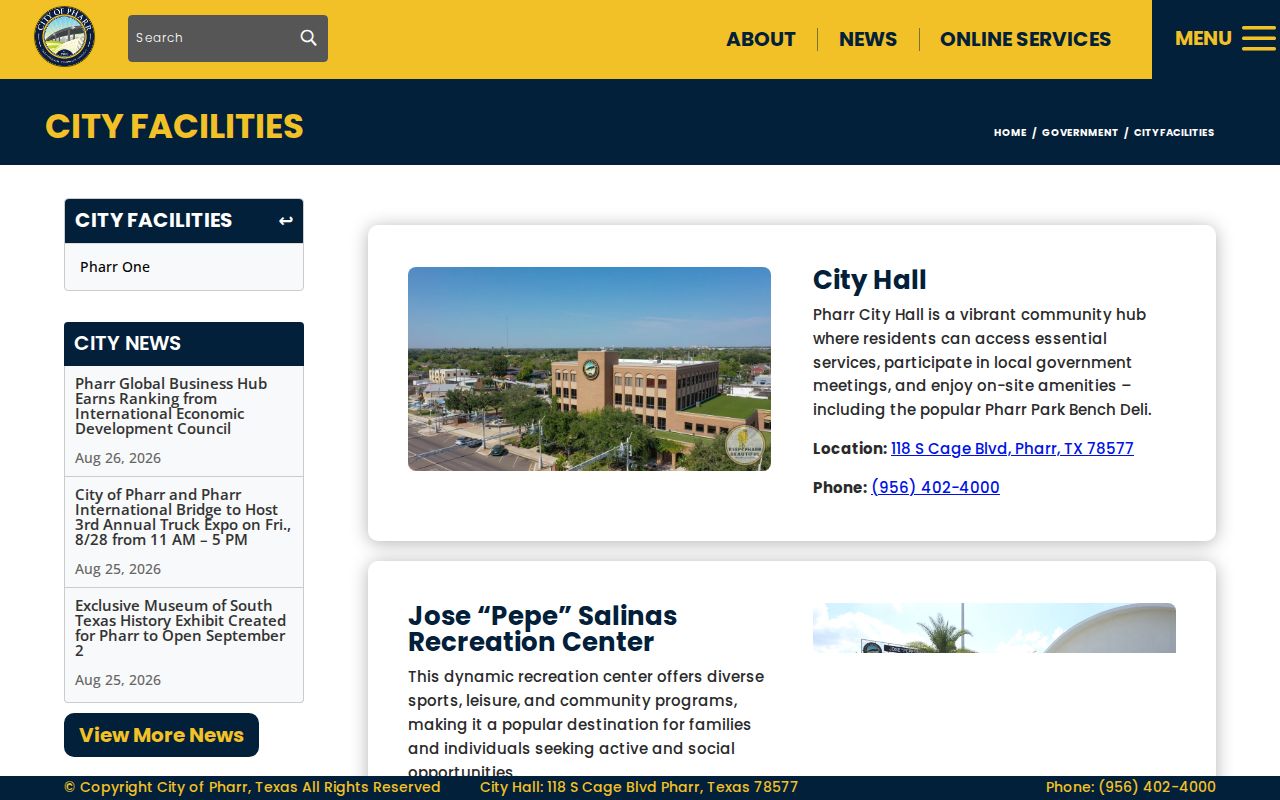
The city facilities page shows the library setting and public research services.
Bring a spelling variant, a street form, and a date range so staff can help match a catalog or archive item to the right Pharr household.
Hours listed in the research were Monday through Thursday 9 to 9, Friday and Saturday 9 to 6, and Sunday 1 to 6. Those hours can change, so check with the library before a records visit. Note: A catalog hit identifies a potential source, not a confirmed entry for the named person.
Pharr City Directory Year Gap
The missing publisher and year-run information is a useful research result, not a reason to guess. Texas directories are commonly held as print or microform at TSLAC in Austin, where staff do not search or transcribe them by phone or email. UNT digitized directories can be searched by county and period, and the Briscoe Center has a Texas directory collection reaching roughly from the late nineteenth century to the present. Search each institution using both Pharr and Hidalgo County. Record the exact title, publisher, year, page, and access location before treating it as a local city directory.
Pharr Memorial Library, the Austin Reading Room, the UTRGV Edinburg depository, and a FamilySearch affiliate library form the documented in-person fallback chain. Ask archives by phone or email about reproduction, microfilm, interlibrary-loan, and access rules. TSLAC supports interlibrary loan for eligible materials. If a listing cannot be verified, pair the address with the County Clerk, tax, or appraisal source instead of copying an uncertain claim.
Research tip. Photograph or transcribe a volume’s title page and abbreviation key before taking notes from a possible Pharr city directory. Those pages establish the publisher, year, and notation used.
Reading a Pharr City Directory Entry
TSLAC describes what a Texas city directory commonly contains. A real entry may connect a name with an address, telephone number, spouse, other directory descriptors, and an ownership or occupancy indicator. The reviewed research did not find a Pharr sample page, so the fields below describe the state guide’s usual entry pattern, not marks proven for a particular Pharr volume. Read the title page and any abbreviation key before interpreting a notation. A dated entry supports association at that time; it does not settle identity or present residence alone.
| Name | The person listed in the volume, subject to spelling and initials. |
|---|---|
| Address | A residence or other location as printed for that edition. |
| Telephone | A number if the particular directory included one. |
| Spouse or descriptor | Relationship or identifying detail when the publication supplied it. |
| Occupancy indicator | An ownership or occupancy mark if the volume’s key defines one. |
- Criss-cross directory
- An address-ordered section that can help connect a known street address to the listed household. No verified Pharr criss-cross run was located.
- Householder index
- A name-led index that points to the household entry or address in a directory.
- Abbreviation key
- The volume’s explanation of its shortened words and marks. Use that key rather than assuming a statewide meaning.
Pharr Press City Directory Clues
The Pharr Memorial Library collection at Portal to Texas History offers a documented alternative when a city directory cannot be verified. Its 764 items span four collections and four decades, with newspaper material from the 1950s through the 1980s. Search by full name, spelling variant, neighborhood, street, school, organization, event date, or business. Guided, Advanced, and Proximity Search can match Full Text, Metadata, Title, Subjects, Creators, or Names. The collection includes Spanish-language material, so a single English-only search can leave out relevant results.
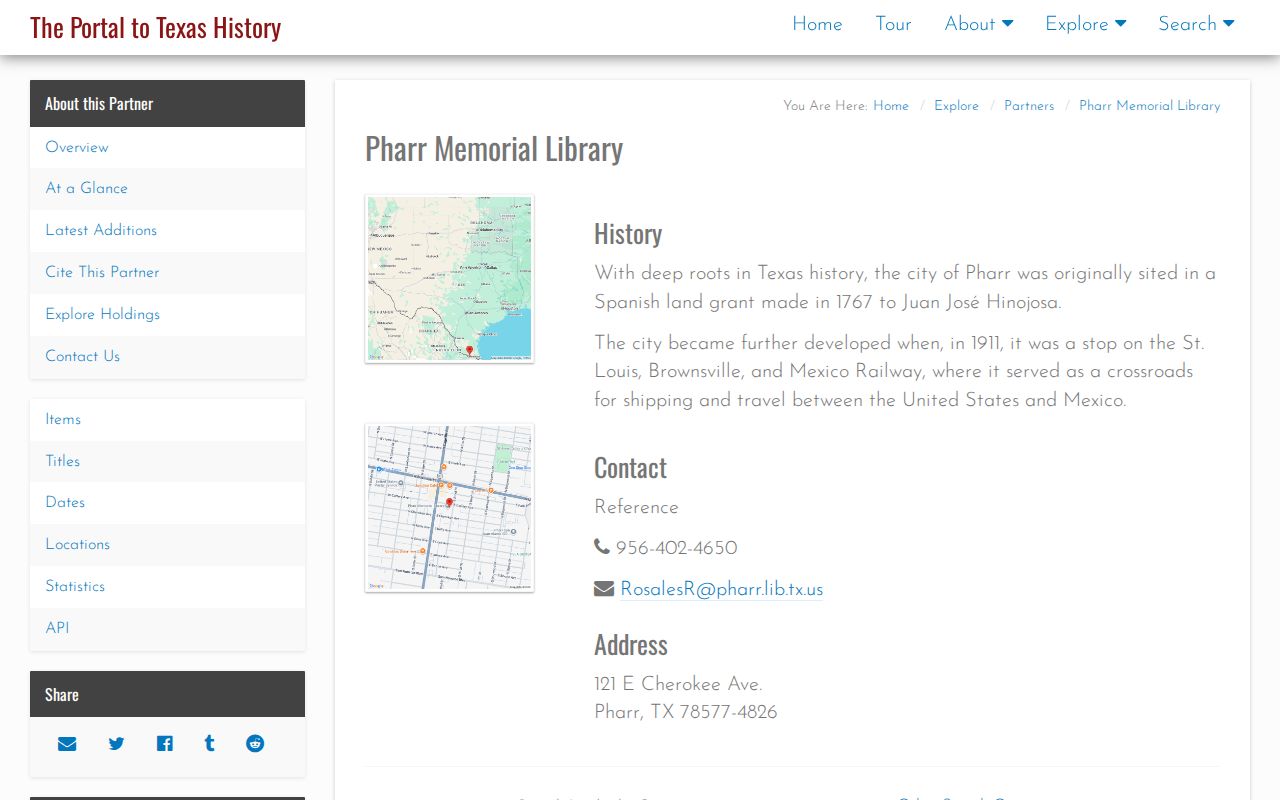
The Portal to Texas History partner page displays filters for the Pharr Press and related newspaper collections.
For each useful item, save the title, date, page or image, collection name, and stable item URL. OCR can miss accents and column layouts, so inspect the page image before accepting a name match.
Tracing Pharr City Directory Households
When a verified city directory volume is found, use it as one dated layer in a Pharr household trail. Start with the exact edition and spelling. Then compare its address with a deed, tax, or appraisal reference, keeping a clear distinction between a parcel location and a mailing address. Follow the same name into later verified editions, newspapers, and yearbooks. The County Clerk’s instruments can provide the legal description and recording context that a printed entry lacks. Modern address-keyed work belongs with the Pharr By Street directory; historical city-directory work needs each year recorded separately.
- Capture the volume title, publisher, year, page, name spelling, and every printed address detail.
- Search the same year and nearby years in Pharr Press, using English and Spanish variants where relevant.
- Compare a dated address to the County Clerk deed index or tax record, preserving the record date and legal description.
- Pair the dated address with the appropriate federal census release available through a library or archival source.
- Use PSJA yearbooks, cemetery material, probate references, or obituaries only as dated cross-checks, never as current proof.
A disappearance from a volume has several possible causes: a move, a death, a changed spelling, a changed publication practice, or no listing. Only a separate, dated record can narrow that result. Note: The strongest trail keeps each source date and custodian beside the address form used.
Pharr City Directory Time Layers
Pharr’s record history explains why no one source fits every period. The area is tied to a Spanish land grant in 1767. The townsite was organized in 1909, rail service arrived in 1911, and Pharr incorporated in 1916. Earlier property history is more likely to sit in Hidalgo County books and microfilm. Railroad-era and later names may surface in newspapers, yearbooks, cemetery material, and eventually digitized OCR. Use the date of the record, not its upload date, to place an address in the right time layer.
The July 1916 square-block fire is another useful Pharr search anchor. Fire history identifies Pharr Lumber, Pharr Mercantile, Folsom Hardware, the National Theatre, and other businesses among the losses. A researcher can search those names with the fire date in Pharr Press and then compare any dated address with council, property, or rebuilding records. The first equipment arrived in early 1917, volunteer firefighting began that year, and an organized department followed in 1922. Those milestones help locate historical material without guessing at a directory entry.
- 1852 forward: Hidalgo deed, marriage, and probate materials provide older county context.
- 1909 to 1916: townsite, rail, and incorporation dates give useful search anchors for Pharr history.
- 1950s to 1980s: the documented Pharr Press collection supplies searchable newspaper evidence.
- Later years: tax, appraisal, county instruments, and city files may provide address context, subject to their access limits.
Pharr City Directory Research Access
TSLAC’s Hidalgo County microfilm inventory names UTRGV Edinburg as a depository and lists direct and reverse deed indexes, maps, marriage records, probate minutes, and Spanish-transcribed deeds. These reels are discovery tools. Cite the reel, volume, page or image, and date, then confirm the underlying record with the depository or custodian. For a city-held archival item that is not online, a focused written public-information request should seek an existing record by topic and date range rather than ask an agency to conduct research.
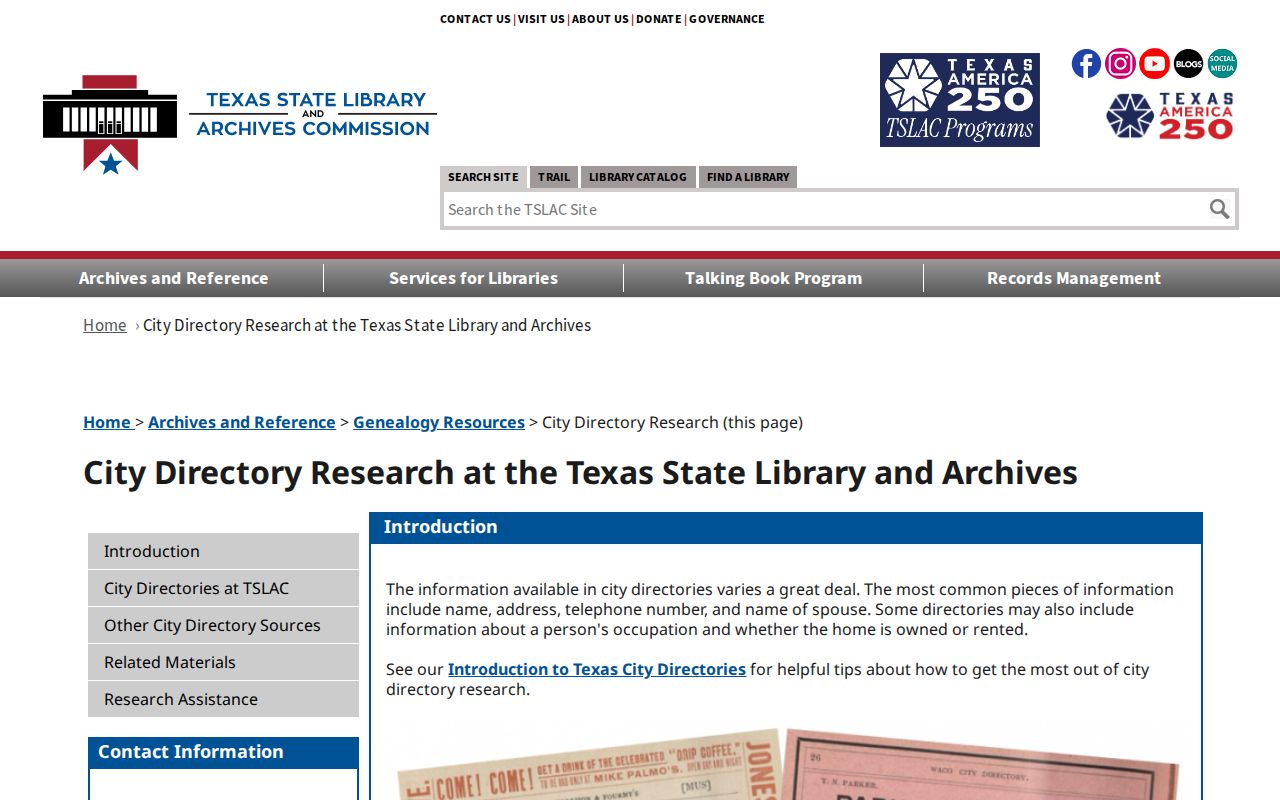
The TSLAC city-directory guide records the state library’s directory access limitations and provides a useful starting point for a verified collection search.
Online collections, an archive visit, a phone or email inquiry about reproduction, and an interlibrary-loan request are complementary paths, not interchangeable claims of access.