
Pharr Previous Residents by Era
Pharr previous residents leave different records in different periods. A current tax or appraisal record is a useful starting point because it supplies a parcel or account key, but it may show a mailing address that differs from the property location. The Hidalgo County Clerk holds deeds, plats, liens, releases, and related instruments. Its online portal can search a grantor or grantee, subdivision, document type, document number, and recorded-date range, yet the portal does not state an online index start year. Earlier trails move to TSLAC reels, local newspapers, and archive material. Treat each source as a dated association, not as a universal list of who lived at the address.
| Source | Years It Covers | Where Held | What It Shows |
|---|---|---|---|
| Hidalgo County Clerk recorded instruments | Online start year not displayed | Official records portal and County Clerk | Recorded deed and legal-description leads |
| Hidalgo deed volumes and indexes | 1852 forward, with dates by volume | TSLAC inventory and UTRGV Edinburg | Earlier property-chain references |
| Pharr Press newspapers | 1950s through 1980s collection material | Portal to Texas History | Dated street, family, school, and civic context |
| PSJA yearbooks and cemetery research | Years not stated in reviewed sources | UTRGV and Pharr Memorial Library resources | School-era or burial context |
| City permit or code records | Coverage not stated | Pharr Development Services or City Clerk request route | Existing address-based municipal records |
Start with the era that can be documented. Use the County Clerk and tax route for a parcel trail, the library for historical names, and a focused city request only for an existing municipal record. The exact Pharr city-directory publisher and year run were not located, so a claimed directory year needs independent verification before it is used for past residents.
Pharr Addresses in Previous-Resident Records
Normalize a Pharr address before looking for prior residents: keep the street number, directional, street name, suffix, unit, and ZIP in a source note, then try the official city spelling without punctuation. Hidalgo County tax search uses a Property Address option marked “Starts With.” It also accepts owner name, account number, CAD reference number, and fiduciary number. The account or CAD reference can carry a parcel trail through records more reliably than a personal name. In the deed index, preserve the legal description and instrument number because a street address can change or appear in several forms.
The official HCAD site is the proper appraisal route, although the reviewed official text did not expose current interactive fields or a direct current map interface. HCAD public appraisal material describes ownership, address, square footage, land size, age, class, construction type, and GIS context. A parcel location and a mailing address may differ. Do not collapse them into one claim about a past household.
- Parcel
- A defined piece of land tracked by an account or geographic identifier in appraisal and tax records.
- Legal description
- The land description in a recorded instrument. It is more stable than a casual street form when following older deeds.
- Mailing address
- The address used for communications with an owner. It may not be the physical location of the parcel.
Pharr Previous Residents on Hidalgo Reels
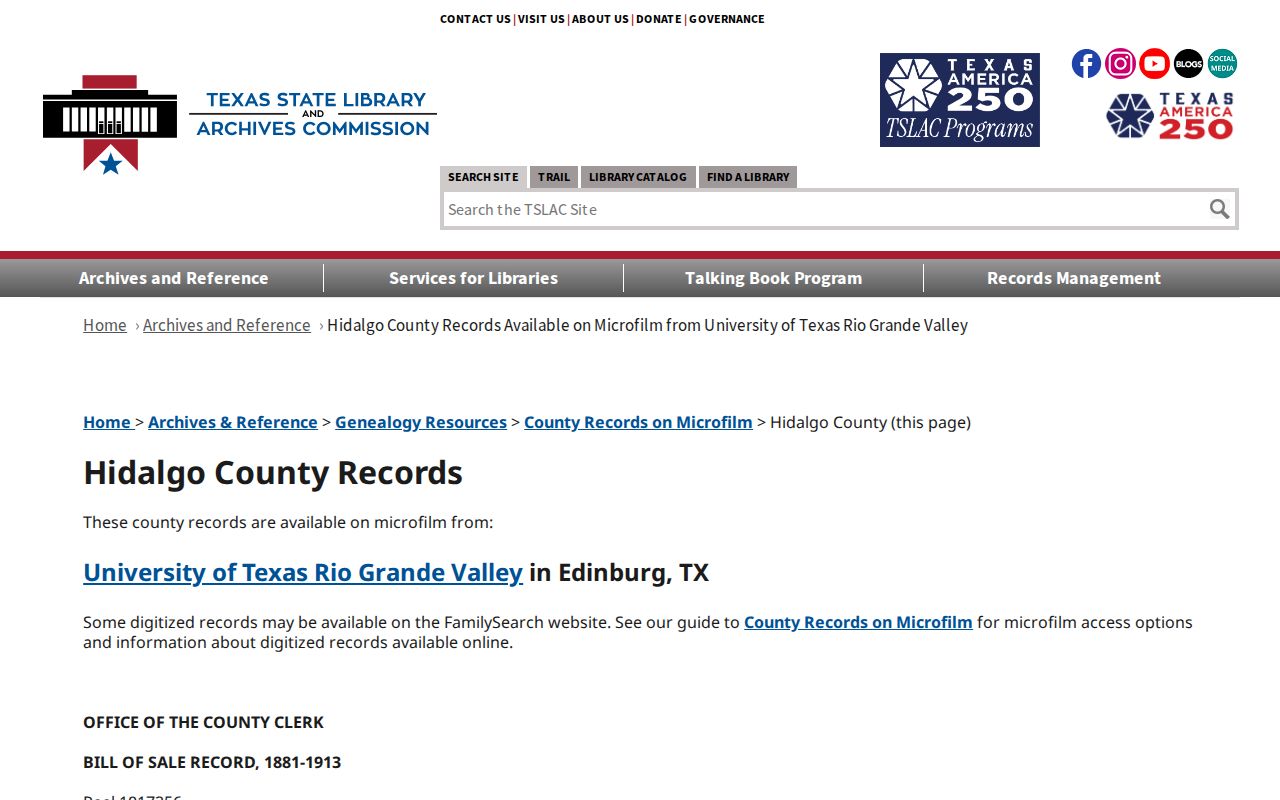
When the web portal reaches an unknown cutoff, Hidalgo County’s microfilm inventory supplies the older route. TSLAC lists deed record direct indexes and reverse indexes by letter, original and transcribed volumes from the 1850s through the 1880s, an 1880 to 1912 supplement, and a Spanish-transcribed deed record for 1854 to 1896. It also lists marriage records, probate minutes, county and commissioners court minutes, and maps. Probate minutes were not indexed, and case papers were not filmed, so a reel reference is a lead to verify with the custodian or depository.
TSLAC’s Hidalgo County inventory identifies the reels and historical county record series.
Copy the reel number, volume, date span, page or image, and spelling variant before requesting an underlying record. Spanish-transcribed land material is an especially useful reason to search both spelling forms.
Pharr Previous Residents and the Deed Chain
The Hidalgo County Clerk is the primary custodian for recorded deeds and related instruments. Its official records portal offers Quick Search and Advanced Search. A search term can be a grantor or grantee, subdivision, document type, or document number, and the recorded-date range can narrow the result. The help material also supports party roles, document groups, AND, OR, NOT, and image-text tools, though image text is not available for every document. Open the image when available and check the legal description, volume or page, and instrument number. The index is a lead; a certified copy comes from the clerk when official certification is required.
- Use the tax or appraisal route to capture the parcel’s location address, account or CAD reference, and legal description.
- Find the current owner’s acquisition instrument through the Hidalgo official-records portal using the name, date window, or legal clue.
- Read the deed image and identify the seller, recording date, instrument number, and legal description.
- Search that seller as a grantee to locate the earlier acquisition, then repeat the same comparison backward.
- When the online trail stops, use the TSLAC direct or reverse indexes and request or inspect the earlier volume through the depository or clerk.
- Grantor
- The party transferring an interest in a recorded instrument.
- Grantee
- The party receiving that interest. A prior seller may appear as the grantee in an earlier purchase.
- Chain of title
- The succession of recorded transfers for the same parcel, traced with dates and legal descriptions.
Hidalgo County lists online, in-person, mail, and phone access through the County Clerk. The 2024 schedule listed official-record searches, plain copies, and certification separately, so ask the clerk for a current quote before ordering.
Pharr Press for Previous Residents
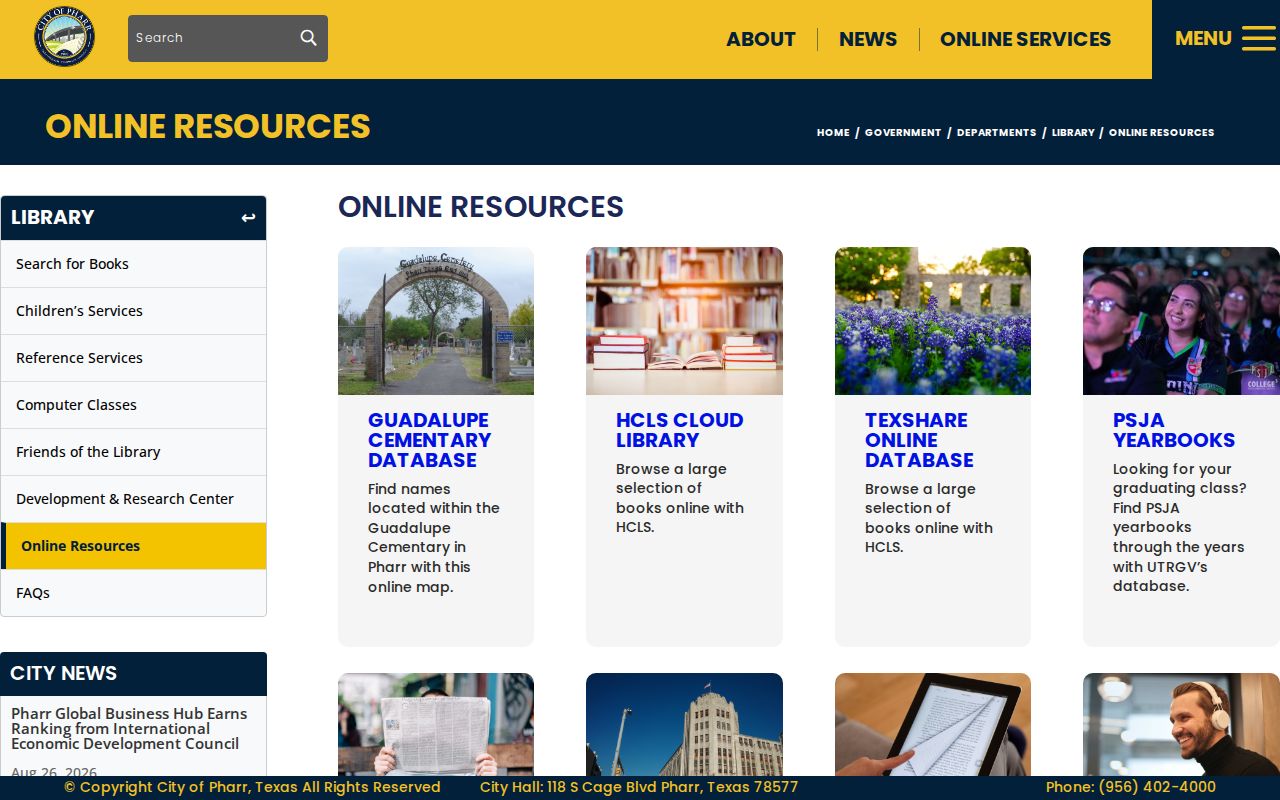
Pharr Memorial Library’s online resources link historical newspapers, the Pharr Press collection, PSJA yearbooks, the Guadalupe Cemetery Database, the HCLS catalog, and TexShare. For a house-history search, use a full name and the street, neighborhood, school, organization, event date, or other dated detail. The Portal to Texas History collection supports Guided, Advanced, and Proximity Search, and its filters include language, decade, collection, and resource type. Search Spanish and English variants where relevant, then inspect the image because OCR can miss accents and narrow newspaper columns.
The library resource page is the starting point for the city’s newspaper, cemetery, and yearbook routes.
A newspaper item can supply an address association, relationship, or civic context, but it is historical evidence only. Save the item title, date, page or image, collection, and stable URL with the address note.
Pharr Previous Residents After the 1916 Fire
Pharr’s July 1916 square-block fire is a strong address-history marker for a small part of town. City fire history identifies destroyed businesses including Pharr Lumber, Pharr Mercantile, Folsom Hardware, and the National Theatre. Search the fire date, business names, volunteers, rebuilding, council minutes, and property instruments around the affected block. The first equipment was an Army-surplus hose reel in early 1917, volunteer firefighting began in 1917, and an organized department followed in 1922. Those dates help distinguish a historical property story from an unsupported claim about a specific person.
For municipal records that are not online, Pharr requires written public-information requests for existing records. The city accepts its requests through the online portal, email, fax, mail, or in person. State the record type, address or case identifier, date range, department, and whether inspection or copies are preferred. An agency need not create a document or perform research to answer a broad question.
Pharr Previous Resident Households
Recorded ownership is only part of an address history. A household trail can add verified city-directory evidence, federal census releases, Pharr Press notices, PSJA yearbooks, cemetery material, and probate references. The exact Pharr city-directory publisher and year run remain unverified, so search for a confirmed title through TSLAC, UNT, or Briscoe before using a directory entry. The collections and access limits are described on the Pharr city directories page. A yearbook is a school-era snapshot, and a cemetery entry can connect a name to a burial location or dates. Neither establishes a living person’s current address.
- Set a date range from the deed chain or tax history and record the parcel’s location address separately from every mailing address.
- Search a verified directory edition, newspaper issue, or yearbook near that date, preserving the edition and page or image.
- Pair a dated household clue with the appropriate census release available through a library or archival route.
- Use probate, marriage, cemetery, and obituary leads to test a move, death, relationship, or spelling change.
- Keep a source ledger with custodian, record date, access date, address form, and uncertainty rather than assuming every name is the same person.
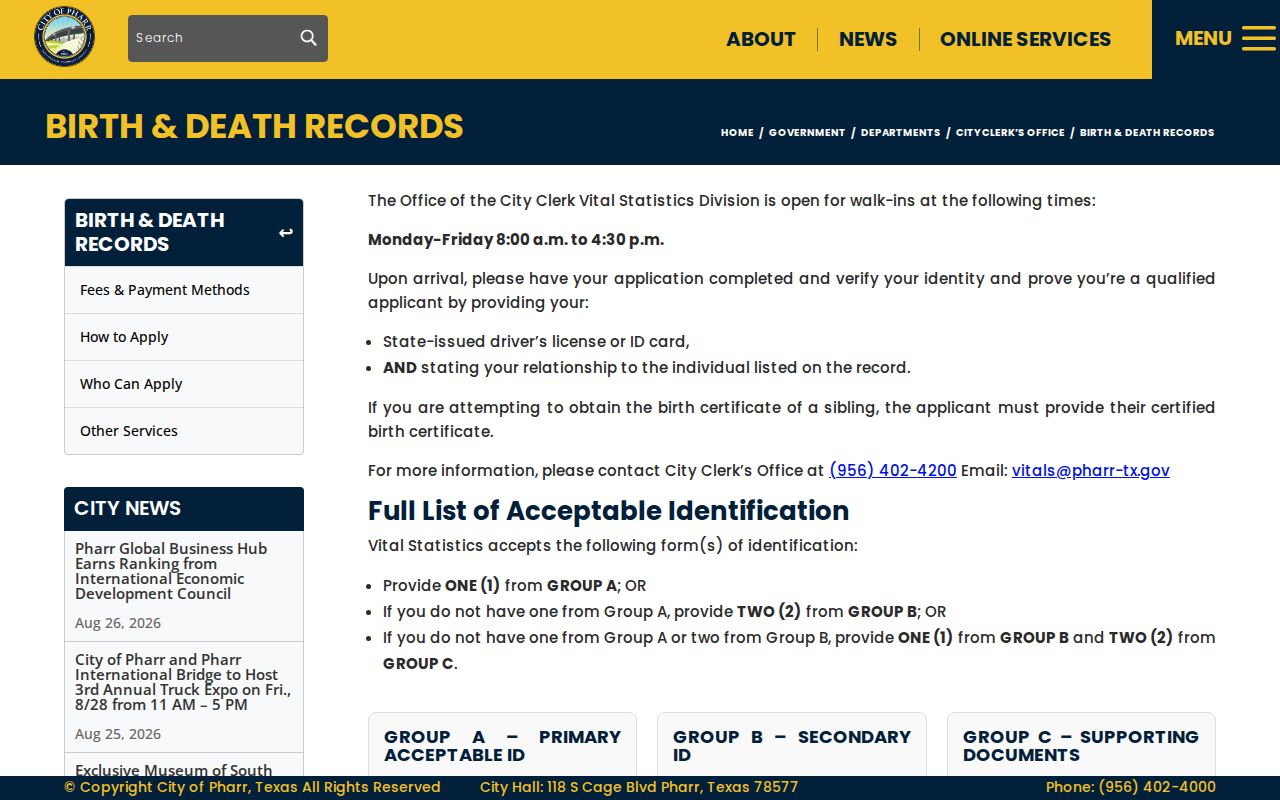
Texas vital-record routes have eligibility and age limits. The Pharr City Clerk issues Pharr births and deaths only, and restricted records require an eligible applicant and identity documentation. A death record documents the event under the permitted copy; it does not identify every prior occupant of an address.
Lawful use. Pharr previous-resident research is suited to family history, estate and heir work, house history, and personal curiosity. Do not use dated records to stalk, harass, or track any living person.
Pharr Previous Residents Missing Records
A portal gap is a cue to change access channel, not to rely on an unofficial substitute. The County Clerk can provide land records through the online search, its Edinburg office, mail, or phone. HCAD and the Tax Office offer official appraisal and tax routes, with in-person, mail, and phone channels when needed. For city permits, inspections, code cases, fire reports, minutes, or other municipal files, direct a written request to the city department or City Clerk. Hidalgo County also has a written public-information route for existing county departmental records. Explain the address, date range, record type, and likely custodian.
Pharr’s birth and death records page explains the local eligibility and identification route for eligible events.
Archive staff and custodians can explain reproduction and access rules, but requests should seek a specific existing record rather than ask staff to reconstruct an address history.
For older material, the documented fallback chain is Pharr Memorial Library Local Archives, the UTRGV Edinburg depository, TSLAC in Austin, MOST archives in Edinburg, and a FamilySearch affiliate library if available. Note: Record every reel, box, item, page, and access rule so another researcher can verify the trail.